 An official website of the United States government.
Description
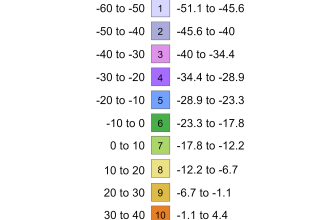
The USDA Plant Hardiness Zone Map is the standard by which gardeners and growers can determine which perennial plants are most likely to thrive at a location. The map is based on the average annual extreme minimum winter temperature, displayed as 10-degree F zones and 5-degree F half zones. A broadband internet connection is recommended for the interactive GIS-based map above.
To find the Plant Hardiness Zone at your location quickly, enter your zip code in the Quick Zip Code Search box in the map above, or click anywhere on the map to view the corresponding interactive map.
- For further instructions on using this map, visit How to Use The Maps.
- To view/print national, regional, or state Plant Hardiness Zone Maps, visit Map Downloads.
- To learn about updates to this map from its previous (2012) edition, visit Map Creation.
Tips For Growers
How to Use the Maps
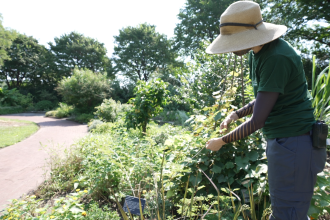
Weed Your Garden
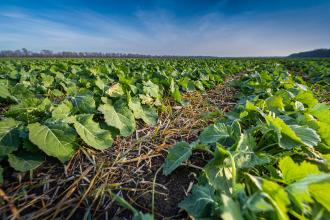
Soil Health

Gardening Tips
Videos: Innovative ARS Research For a Growing World
ARS’s stereo‑vision guided sprayer targets crop canopy volume and applies chemicals precisely where needed, cutting pesticides up to 70%, reducing labor and refill time, making precision spraying affordable for small and medium-sized farms.
ARS scientists nationwide support farmers in growing healthy, productive, and sustainable crops. Learn how regenerative farming practices boost productivity, enrich soil health, and build a sustainable future.
Dr. Steven Mirsky explains how advanced robotics and AI can strengthen U.S. agriculture. Noting that ARS scientists are well positioned to lead development of open‑source tools that rapidly identify plants and pests for precise, site‑specific solutions to agricultural problems.
Read More About ARS Plant Research
Protecting Plants May Start with Seed
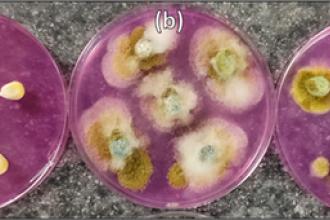
The A-peel of Citrus Fruits
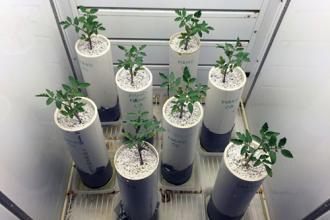
Saving Corn Crops with AI
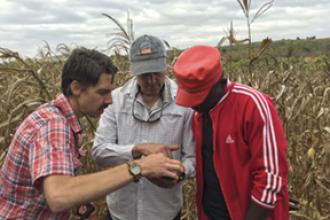
A New Tool for Healthier Plants






Questions?
For questions about the Plant Hardiness Zone Map, email phzminfo@usda.gov.